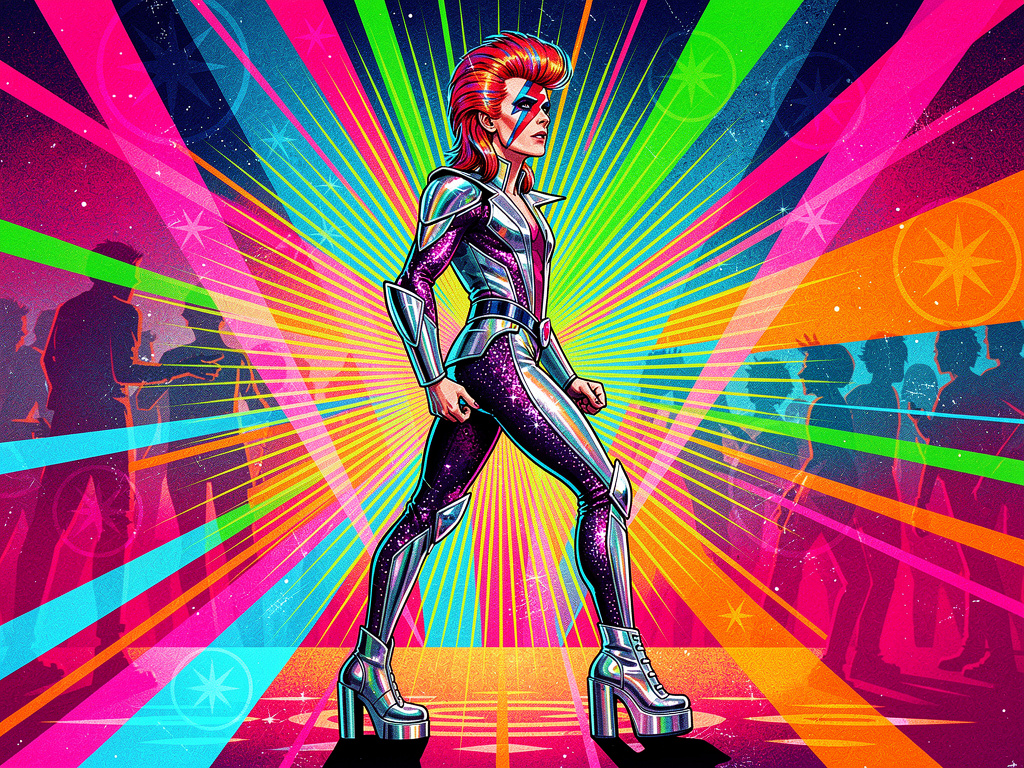
David Bowie: Heroes — A Deeper Look at Its Lyrics, Context, and Enduring Legacy
David Bowie’s “Heroes”, the title track of his 1977 album, stands as one of the most powerful and emotionally resonant songs in modern music. With its soaring vocal performance, hypnotic production by Bowie and Brian Eno, and lyrics that feel both intimate and universal, “Heroes” has become an anthem of hope, defiance, and fleeting triumph.
This article takes a closer look at the historical moment that gave birth to the song, the layers of meaning within its lyrics, and the extraordinary cultural footprint it continues to leave almost half a century later.
The Historical Context: A Divided World, A Searching Artist
When “Heroes” was released, the world felt tense and fractured. The Cold War cast a long shadow across Europe, and Berlin—the city where Bowie was living and recording—was literally split in half by concrete, barbed wire, and ideology. Bowie had retreated there partly to escape the chaotic excesses of fame, and partly to reinvent himself after the explosive glam years.
Living in West Berlin, Bowie found himself surrounded by the contradictions of a city defined by restriction but pulsing with artistic energy. The Wall loomed over daily life; the possibility of change felt both distant and urgently needed.
Out of this atmosphere came “Heroes”, a song that carries the weight of the era but manages to lift it, transforming fear and limitation into a cry of possibility. Bowie doesn’t ignore the darkness—he sings through it.
Digging Into the Lyrics: Intimacy, Defiance, and Fragile Triumph
1. The Power of Choosing Heroism
The song’s central line — “We can be heroes, just for one day” — is deceptively simple. Bowie isn’t promising a fairy-tale transformation or grand destiny. He’s talking about a choice: a moment of courage, a decision to rise above circumstances even if only briefly.
That limitation — “just for one day” — is what makes it powerful. Heroism here is not an identity; it’s an act. Temporary, imperfect, human.
In Bowie’s voice, it becomes an act of rebellion. Even if change is momentary or symbolic, it still matters.
2. Love and Meaning at the Edge of Chaos
While the song is often interpreted as a broad political statement, there is also a deeply personal layer. Bowie later revealed that the image of two lovers kissing by the Berlin Wall — observed from an elevated studio window — inspired the narrative. (The lovers were reportedly Tony Visconti, the album’s co-producer, and his partner.)
This transforms the lyrics into something more intimate:
- Love as an act of defiance
- Togetherness as a shield
- Meaning found in a fleeting moment
The repetition of phrases — “we can be heroes,” “we can beat them,” “we’re nothing — and nothing will help us” — mirrors the way people repeat truths to steady themselves, to push back against despair.
3. The Collective Within the Individual
Although the song speaks about “we,” it doesn’t erase individuality. Instead, it blends the two:
- Individual bravery becomes the spark
- Collective spirit becomes the flame
In a world where grand transformations seemed impossible, Bowie suggests that small, shared acts of courage can carve out space for freedom, even in impossible places.
This duality is why the song resonates across movements, countries, and generations. It speaks both to the solitary listener wearing headphones and to crowds united by a cause.
Cultural Impact: A Song That Refuses to Fade
Since its release, “Heroes” has grown from a cult favorite to one of Bowie’s defining works. Its emotional message has proven universal enough to accompany major sports events, political moments, and cinematic scenes.
In Film and Media
One of the most memorable modern uses of “Heroes” appears in Wonder Woman (2017), where its triumphant, emotional swell underscores themes of courage and collective strength — perfectly echoing the spirit of the lyrics.
A Magnet for Cover Versions
Artists from all genres — from Peter Gabriel to the Wallflowers to Motörhead — have covered the song. The sheer variety of interpretations speaks to its versatility and emotional depth. Each version finds something new in it, which is a testament to Bowie’s layered songwriting.
A Song That Still Means Something
Whether played during political protests, personal milestones, or moments of reflection, “Heroes” is a reminder that courage doesn’t have to be grand to be meaningful. The song continues to grow because every generation finds its own reason to believe in that “one day.”
Conclusion: Why “Heroes” Still Inspires
David Bowie’s “Heroes” remains a timeless masterpiece because it speaks to something deeply human: the yearning to rise above circumstances, to connect with someone else, and to find meaning even in the face of limitation.
The song’s layered message — part love story, part political meditation, part existential affirmation — continues to resonate. It invites us not only to dream of being heroes, but to consciously choose moments of bravery, compassion, and connection.
And sometimes, as Bowie suggests, one day is enough.
FAQ
What does “We can be heroes, just for one day” mean? It suggests that heroism doesn’t require perfection or permanence. Anyone can choose to act bravely or meaningfully, even briefly. Bowie elevates the small, defiant gestures that shape our lives.
How has “Heroes” influenced modern culture? The song appears frequently in films, TV shows, and major events. It has been covered widely, reflecting its emotional versatility and enduring relevance.
What themes define “Heroes”? Key themes include individuality, shared courage, love under pressure, defiance in the face of limitation, and the search for meaning in challenging times.
 247 path learner
Laisser un commentaire